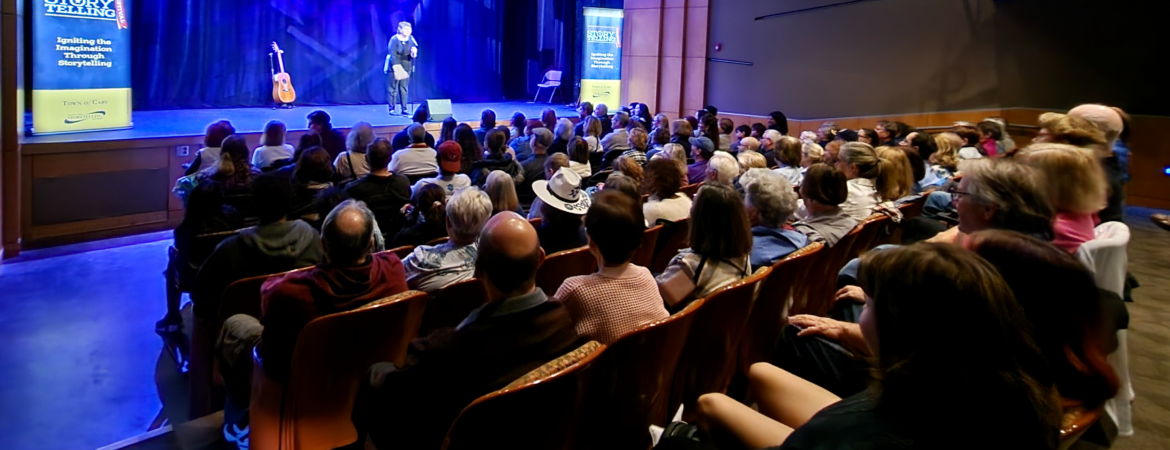
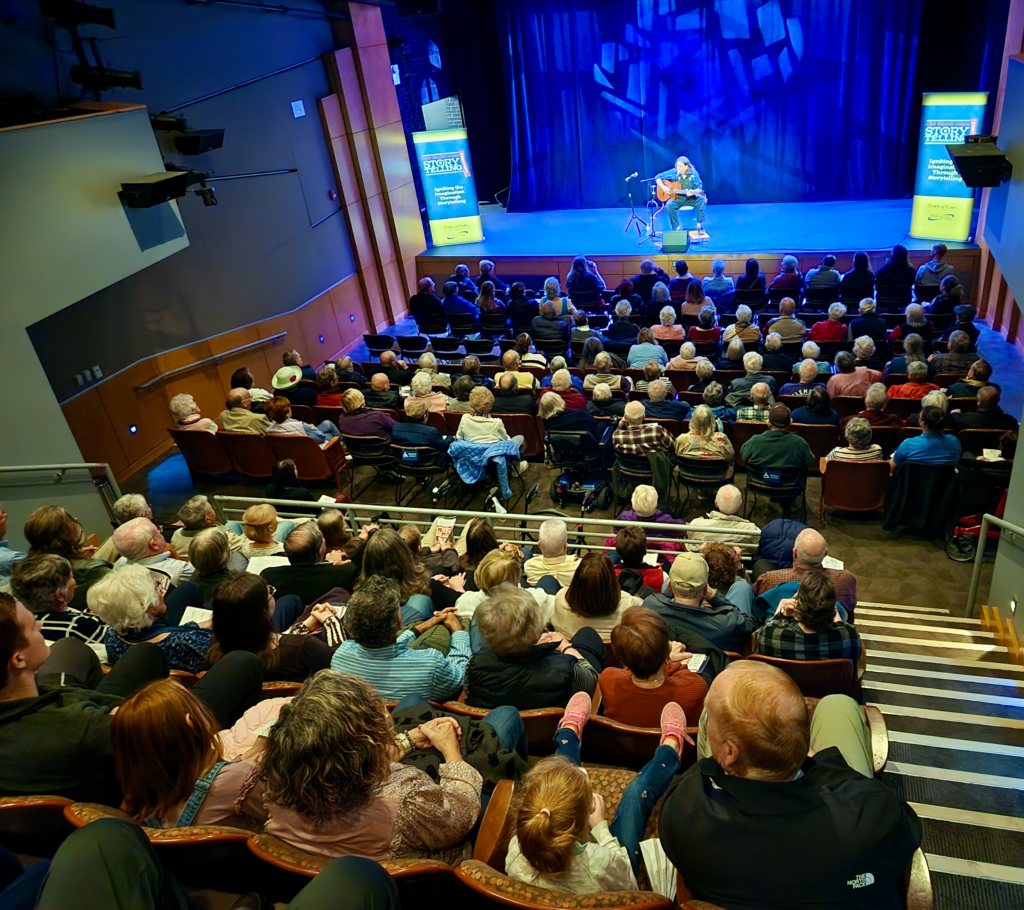
Only live storytelling can create an evening like this: a room full of people laughing at the same line, leaning in for the quiet part, and walking out a little lighter than they arrived. The 2026 Old North State Storytelling Festival returns to The Cary on November 7 and 8. At the Cary Theater, the festival features four Showcase performances of stories and music.
What is in Store For the Audience?
For anyone who has never been, the North Carolina Storytelling Guild puts it simply.
“Storytelling is a time to smile, laugh, and hear the spoken word, so why not? … Expect the unexpected, in a very special way.”
Most first-timers arrive with a vague idea of children’s storytime and leave thinking, “I had no idea it would be so wonderful.”
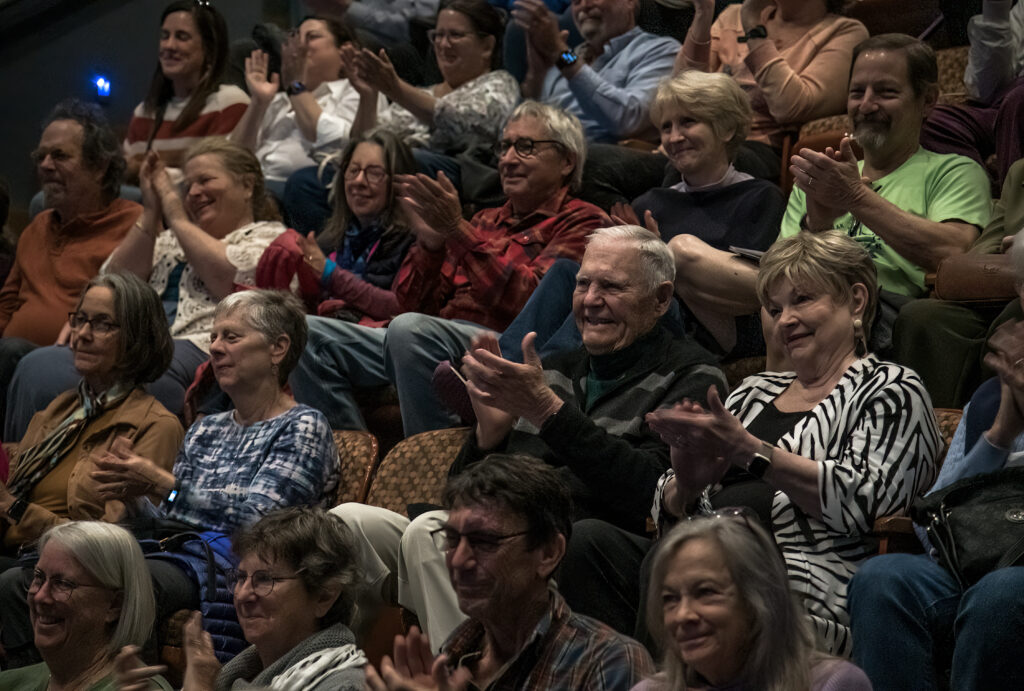
The festival has sold out in recent years, and that demand says something.
“Cary is a vibrant community where folks have found something special about story,” the Guild says. “Many mark their calendar for that first Friday and Saturday in November looking forward to a show of various stories! It’s not a play, not a concert, but a time to have fun and be entertained… People crave that interaction and intimacy.”
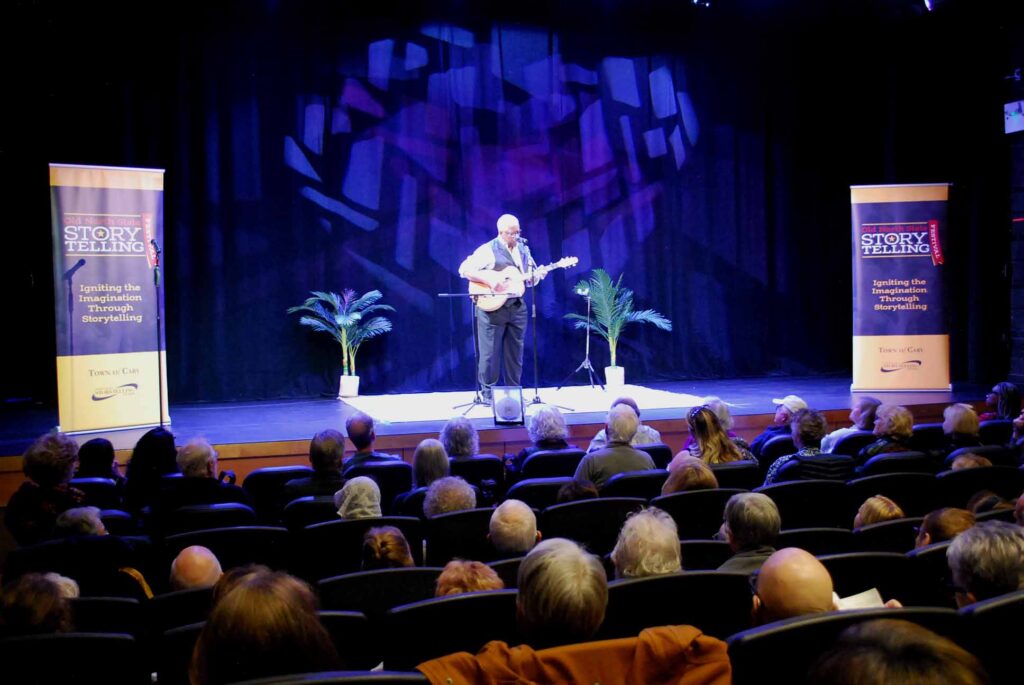
This year’s lineup delivers that mix. Mo Reynolds braids folk tales with personal narrative. Rev. Robert B. Jones, Sr. brings more than forty years as a musician, more than twenty as a pastor, and more than fifteen as a storyteller. Charlotte Blake-Alston has carried African and African American oral traditions for more than thirty years. Often with djembe, mbira, or the 21-stringed kora; she is the Official Storyteller of The Philadelphia Orchestra. Andy Russell tells warm North Carolina stories of grandparents, cane-pole fishing, and music with friends.
“There will be different kinds of stories from this wonderful group,” the Guild says. “You will be laughing at times, tapping your feet, and may need to ponder a moment.”
All performances are family-friendly and vary by showcase.
A Showcase for All
On Saturday morning, a dedicated Sensory-Friendly Showcase runs at 10:00 a.m. (doors at 9:30 a.m.). This performance welcomes up to 75 guests, so there is extra space and a calmer environment. The theater stays gently lit, sound levels are slightly softer, and a designated break area streams the show so no one misses a moment. It is movement-friendly and relaxed. The stories are short, with visual aids and interaction, and audience members are welcome to wiggle, shift, and express themselves without the expectation of complete silence.
The festival added the Sensory-Friendly Showcase two years ago after committee members recognized the need for a calm, accepting space where people with disabilities or sensory challenges could experience storytelling.
“The design process really starts with knowing your audience and understanding your community,” organizers explain. “We considered things like lighting, seating arrangements, opportunities to move around or stand, and the flexibility to take breaks as needed… Ultimately, the goal was to remove barriers and create an experience where individuals and families could participate in a way that works best for them.”
That shift in expectations extends to the storytellers, too.
“A sensory-friendly audience may respond differently than a traditional theater audience,” they note. “There may not always be laughter, applause, or other noticeable reactions, and that’s okay… People experience and express enjoyment in different ways.”
Caregivers feel the difference too.
“This type of judgment-free environment also supports caregivers,” the organizers shared. “Often in public spaces, caregivers have to be on alert to support their child… If the environment and the planning is intentionally judgment-free and allows for options based on the person’s needs in the moment, this can bring relief. It also welcomes the opportunity to engage in an activity as a whole family.”
After the debut, families told the festival how meaningful it was to enjoy a storytelling event without worry. That feedback shaped the showcase, which now includes a visual schedule so guests can see what to expect.
“Building on that, we added a visual schedule, giving the audience clear visual cues about what to expect. This simple addition can make a big difference, especially for those who may feel anxious in new environments or when they are unsure of what will happen next.”
Get Your Tickets
Tickets and details are at oldnorthstatestorytellingfestival.com.
If you have been curious but hesitant, the Guild’s advice is the best starting point: give it a try. The stories can be funny or light, or make you think. Either way, they are meant to be shared in a room, together.